

08 Oct October Big Day 2026 in Caño Negro: Why Birdwatching Matters
October Big Day 2026: When Watching Birds Becomes Part of a Bigger Story
On October 10, something remarkable will happen around the world.
Some people will wake up before sunrise and head into forests, wetlands, mountains, and coastlines with binoculars in hand. Others will simply step into their gardens, sit on a balcony, or stop for a few minutes beside a familiar patch of trees.
They will all be doing the same thing: watching birds.
But October Big Day is no longer just about seeing how many species can be found in 24 hours. It has become something much bigger.
From a bird list to a global picture
Birdwatchers have always kept lists. There is something naturally satisfying about remembering the first time you saw a particular species, writing down where it appeared, or comparing what you saw one year with what you find the next.
What has changed dramatically is what can now happen to that information.
Today, observations submitted through platforms such as eBird become part of an enormous global database used to understand where birds occur, when they move, and how their populations change over time. Cornell Lab’s eBird science program now produces information on bird distribution, abundance and trends using observations contributed by birders around the world.
A bird seen for a few seconds can therefore become part of a much longer story. That is what makes October Big Day so interesting.


October 10, 2026
This year’s October Big Day takes place on Saturday, October 10, 2026, bringing birders together across countries and time zones for a single day of observation.
You do not have to be an expert. You do not need to spend the entire day in the field. Even a short observation can contribute.
The idea is simple: observe the birds around you and record what you see or hear. Behind that simple action, however, is one of the largest citizen-science efforts in the world.
Last year’s October event reached an extraordinary scale. BirdsCaribbean reported that in 2025 roughly 900,000 people participated, with about 48,000 eBirders contributing 2.1 million individual bird observations. It was also the first October day to surpass 100,000 eBird checklists in a single day.
Those numbers tell us how much birding has changed.
What we know now that we could not see before
Imagine trying to understand bird migration several decades ago.
Researchers could study individual locations. Birds could be banded. Observers could maintain notebooks. Expeditions could document seasonal movements. All of that remains valuable.
But today, thousands upon thousands of observations can be combined. Instead of seeing isolated points, researchers can begin to see patterns.
Where does a species appear first? When does it arrive? How long does it stay? Does it use the same areas year after year? Is its range shifting? Are fewer birds appearing in a particular region than they did before?
eBird data can now be used to produce high-resolution estimates of where species occur, their relative abundance, and changes in populations over time. Those datasets are also used to create increasingly detailed visualizations of migration and to help guide conservation decisions.
That is quite a transformation from a handwritten list in a field notebook. And yet the entire system still begins with something wonderfully simple: someone noticing a bird.
Why 2026 feels especially important
The scale of participation is one reason. But another important change is how connected bird information has become.
eBird has accumulated more than two billion bird sightings contributed by over a million birders, creating an extraordinary record of bird occurrence around the planet.
At the same time, the scientific infrastructure behind bird records continues to become more unified. In 2025, eBird’s global taxonomy moved close to alignment with the new AviList global bird taxonomy, helping birders and scientists around the world work from a more consistent framework for species names and classification.
Better observations, better technology, better global participation and better agreement about the birds themselves all mean that a Big Day in 2026 can tell us far more than similar events could have told us years ago.
And then there is migration
October makes this particularly fascinating.
Across the Americas, enormous numbers of birds are moving. Some have traveled from breeding grounds far to the north. Others will continue farther south. Some will remain in Central America for months.
Their journeys connect places that may be thousands of kilometers apart.
A bird does not experience Canada, the United States, Costa Rica or South America as separate conservation problems. It simply needs the next suitable place to survive: a forest, a coastline, a wetland, a safe place to rest, enough food to continue.
That is why observing migratory birds gives us more than an interesting species list. Their presence can tell us something about the network of habitats that makes their entire journey possible.
Why Caño Negro matters
This is where October Big Day becomes especially meaningful for us at Natural Lodge Caño Negro.
Caño Negro is not simply a place where many birds can be photographed. It is part of a living wetland system used by resident species and migratory birds alike.
When a bird appears here during migration, Caño Negro may represent only one chapter of its journey—but that chapter can be essential: a place to feed, a place to recover energy, a place to wait, a place from which to continue.
For a birder, that creates a fascinating perspective. The bird in front of your camera may have been hundreds or thousands of kilometers away only weeks before. And weeks from now, it may be somewhere entirely different.
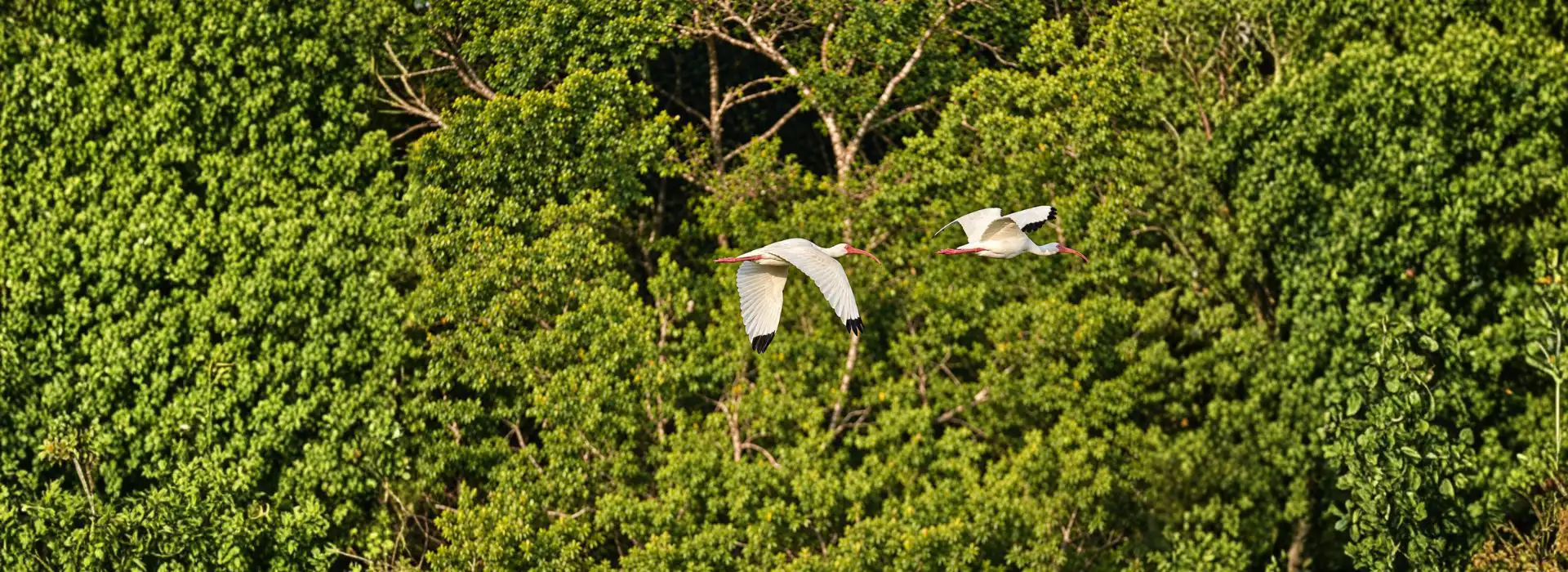
Suddenly, the photograph becomes more than a portrait. It becomes evidence of a journey.
The photograph is only the beginning
Over the coming days, as we approach October Big Day, we want to explore that idea further.
Not simply: What birds can we see?
But: Where have they come from? Why are they here? What does observing them teach us? And why do places such as Caño Negro matter to their survival?
We will also be sharing the perspective and photography of Costa Rican bird photographer Javier Chávez, whose work has documented the remarkable birdlife of Caño Negro.
Because good bird photography does something special. It freezes a fraction of a second. Science and observation can then help us understand everything that happened before—and everything that may happen next.
On October 10, millions of people will look toward the trees, the water and the sky. Together, those moments will create another snapshot of the world’s birds. And here in Caño Negro, we will be watching too.
October Big Day 2026 — October 10
Observe. Record. Understand. Protect.
Sorry, the comment form is closed at this time.