

06 Mar Slaty-tailed Trogon: One of the Quiet Jewels of Caño Negro
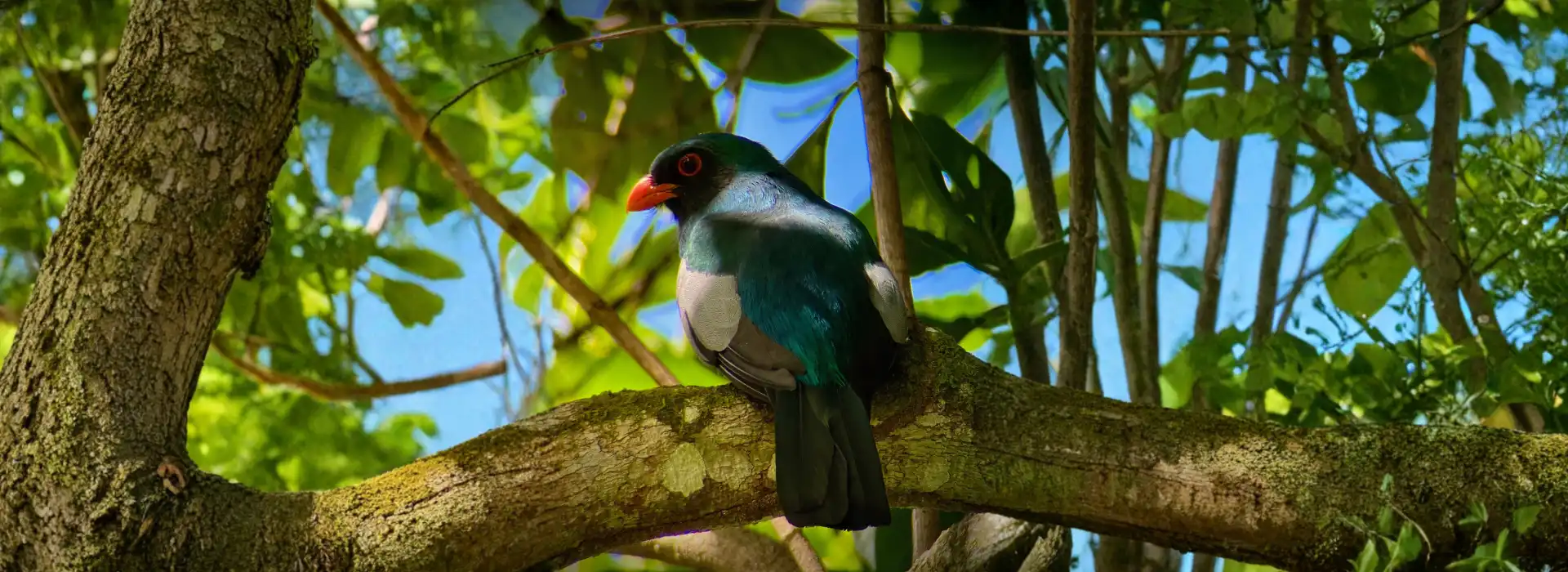
Slaty-tailed Trogon: One of the Quiet Jewels of Caño Negro
In the dense green world surrounding Caño Negro Wildlife Refuge in northern Costa Rica, some birds announce themselves loudly, while others reveal themselves quietly.
The Slaty-tailed Trogon (Trogon massena) belongs to the second group.
This elegant trogon is one of the most beautiful birds visitors may encounter around Natural Lodge Caño Negro. With its deep green head, slate-colored tail, and vibrant red belly, it looks almost unreal when sunlight touches its feathers. Yet despite its striking colors, the Slaty-tailed Trogon often sits motionless, blending perfectly with the forest canopy.


A Bird That Prefers to Watch the Forest
One of the first things people notice about trogons is how still they are.
Instead of constantly flying around, the Slaty-tailed Trogon usually perches quietly on a branch at mid-level in the forest. From there it patiently observes its surroundings.
When it decides to move, it launches into a short, graceful flight, grabs an insect or fruit, and quickly returns to another perch.
Around the lodge they are often seen:
• Along forest edges near water channels
• Perched above shaded trails
• In tall trees surrounding the gardens
• Near fruiting trees where insects are abundant
Early morning is often the best time to spot them.
A Master of the Sit-and-Wait Strategy
Unlike birds that actively chase prey, the Slaty-tailed Trogon is a patient hunter.
Its feeding strategy is simple:
1. Perch quietly in a shaded branch
2. Watch carefully for movement
3. Make a short flight to capture prey
4. Return to the perch
Their diet includes insects, caterpillars, beetles, small lizards, and forest fruits.
This mixed diet allows them to thrive in the forests and wetlands around Caño Negro.
Nesting Habits
Instead of building a traditional nest, Slaty-tailed Trogons typically nest inside natural cavities in soft or decaying trees.
These cavities may come from woodpeckers, broken branches, or natural tree decay. Both parents participate in incubating the eggs and feeding the chicks.
Because they rely on mature trees with cavities, healthy forest habitat is extremely important for their survival. This is one reason protected wetlands like Caño Negro are so valuable for wildlife.
Why Seeing One Feels Special
Even though the Slaty-tailed Trogon is not extremely rare, every encounter feels memorable.
Often visitors are walking quietly through the forest when suddenly they notice a flash of red beneath a deep green head, perfectly framed by tropical foliage. The bird may remain still, calmly observing its surroundings.
For a few moments, you are sharing the same quiet space in the forest. Experiences like this remind visitors why Caño Negro is such a special place for nature lovers and birdwatchers.
Sorry, the comment form is closed at this time.