

10 Feb Bare-throated Tiger Heron (Tigrisoma mexicanum)
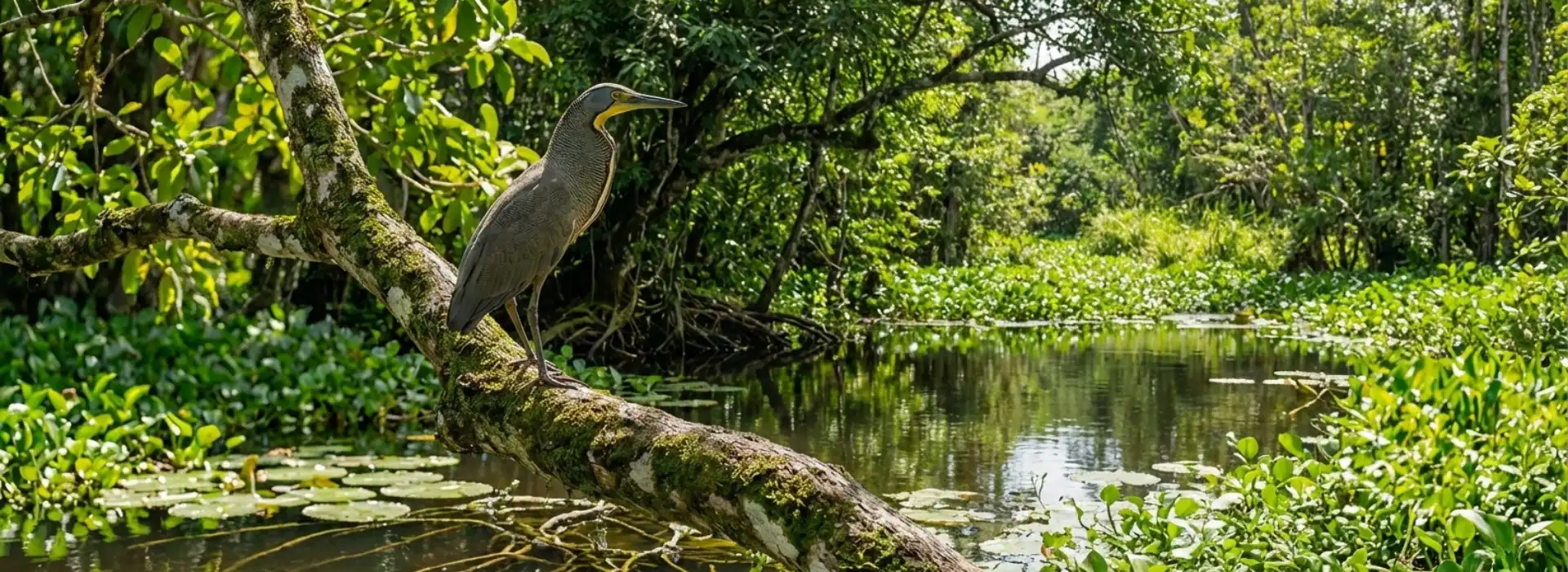
Bare-throated Tiger Heron (Tigrisoma mexicanum)
The Bare-throated Tiger Heron, locally known as Garza Tigre Garganta Desnuda, is one of Costa Rica’s most impressive wetland birds. Recognized for its powerful posture, cryptic plumage, and bare yellow-orange throat, this species thrives in well-preserved wetlands such as Caño Negro Wildlife Refuge.
Identification & Physical Characteristics
This large heron features a thick neck, broad wings, dark gray body, and finely barred neck and chest. Adults show a distinctive bare throat patch, while juveniles present heavier striping and warmer tones. Its camouflage allows it to blend seamlessly into riverbanks and flooded vegetation.


Habitat
The species depends on freshwater ecosystems including marshes, swamps, slow rivers, canals, and flooded forests. Caño Negro offers ideal conditions due to shallow waters, abundant prey, and low human disturbance.
Behavior & Feeding
A solitary and patient hunter, the Bare-throated Tiger Heron feeds mainly on fish, frogs, reptiles, and insects. It hunts by standing motionless before striking rapidly. Activity peaks during early mornings and late afternoons.
Breeding & Nesting
Nesting usually occurs in trees near water. Both parents participate in chick rearing. Stable water levels are crucial for breeding success, making wetland conservation essential.
Best Time to Observe
This species can be seen year-round in northern Costa Rica. Early morning and late afternoon boat tours offer the highest chances of sightings.
Conservation Importance
Although not endangered, the species relies on intact wetlands. Its presence indicates a healthy ecosystem, highlighting the importance of protecting habitats like Caño Negro.
For birdwatchers and photographers, observing the Bare-throated Tiger Heron is a rewarding experience that reflects the wild character of Costa Rica’s wetlands.
Sorry, the comment form is closed at this time.