

20 Jun Boat billed Heron
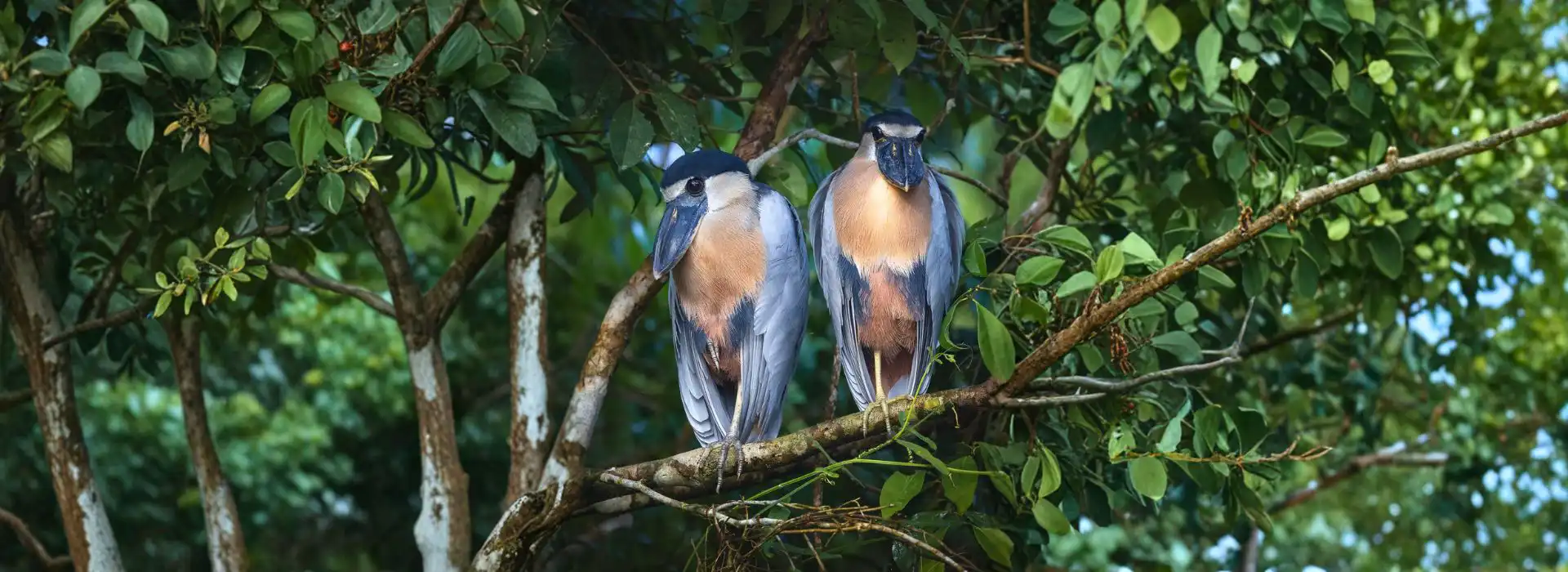
Boat-billed Heron in Caño Negro: A Secretive Wetland Bird of Costa Rica
Some birds announce themselves with bright colors, loud calls, or dramatic flights across the open sky. Others reveal themselves quietly, hidden in the shade, waiting for patient eyes to notice them. The Boat-billed Heron is one of those secretive treasures.
In Caño Negro, where water, forest, and wildlife come together in one of Costa Rica’s most important wetland ecosystems, this unusual heron feels perfectly at home. With its oversized bill, large dark eyes, and calm nocturnal behavior, the Boat-billed Heron is one of the most fascinating species birdwatchers and nature photographers hope to encounter during a visit to the region.
A Heron Unlike Any Other
The Boat-billed Heron, known scientifically as Cochlearius cochlearius, is instantly recognizable once you see its face. Its wide, flattened bill looks almost like a small boat turned upside down, giving the species its English name. This distinctive feature separates it from the more familiar herons and egrets often seen standing in open water.
While many herons are tall, slender, and easy to spot as they hunt in daylight, the Boat-billed Heron is different. It has a stockier body, a broad head, large eyes adapted for low light, and a more secretive personality. Adults often show a beautiful combination of soft gray, black, cream, and warm chestnut tones, making them elegant but surprisingly well camouflaged among branches and dense riverside vegetation.
This is not a bird that usually demands attention. It rewards patience.


Why Caño Negro Is Ideal Habitat
Caño Negro is a landscape shaped by water. The Río Frío, lagoons, marshes, flooded forests, and quiet channels create a rich habitat for fish, amphibians, insects, crustaceans, reptiles, and countless birds. For a species like the Boat-billed Heron, which prefers shaded wetlands and slow-moving water, this environment offers both food and shelter.
Dense riverbanks are especially important. During the day, Boat-billed Herons often rest quietly in trees or thick vegetation, where their muted colors help them blend into the shadows. From a boat, they may appear at first like a dark shape tucked into the foliage. Then the eye catches the bill, the posture, or the shine of a large eye watching from the shade.
That moment of discovery is part of what makes birding in Caño Negro so special. The wetland is not only about large flocks and open-water species. It is also about hidden encounters, quiet observation, and the thrill of finding a bird that many visitors might pass without noticing.
A Nocturnal Hunter
One of the most interesting things about the Boat-billed Heron is its nocturnal lifestyle. Unlike many wetland birds that are most active in the early morning or late afternoon, this species is especially adapted to moving and feeding after dark.
Its large eyes help it detect prey in low-light conditions, while its broad bill is used to capture small aquatic animals along the edges of rivers, lagoons, and marshes. Its diet can include fish, frogs, insects, crustaceans, and other small wetland creatures.
During the day, it usually rests. This is why daytime sightings often show the bird perched quietly in a tree rather than actively hunting. For photographers, that behavior creates a different kind of challenge. Instead of action shots in open light, the goal is often to work with shade, branches, reflections, and natural framing.
A good photograph of a Boat-billed Heron is not only a portrait of a bird. It is a portrait of the wetland itself.
A Special Bird for Photographers
For nature photographers, the Boat-billed Heron offers a unique subject. Its shape is unusual, its face is expressive, and its behavior creates opportunities for intimate compositions.
The best images often come when the bird is partially surrounded by foliage, giving the photograph a sense of mystery. Its broad bill and large eye become the visual focus, while the surrounding green tones help tell the story of its habitat.
Photographing this species requires patience and respect. Because it often rests during the day, it is important not to disturb it. A quiet boat approach, a knowledgeable local guide, and a long lens are the best combination. The goal is not to force the encounter, but to observe naturally and allow the bird to remain comfortable.
In Caño Negro, this slow and respectful style of photography fits the rhythm of the wetland. The boat moves gently, the forest reflects on the water, and every branch has the possibility of holding something remarkable.
When Can You See It?
The Boat-billed Heron can be present in tropical lowland wetlands of Costa Rica, including areas with rivers, marshes, and dense vegetation. In Caño Negro, sightings depend on water levels, time of day, light conditions, and the ability to scan shaded areas carefully.
The dry season is often an excellent time for birdwatching in Caño Negro because lower water levels can concentrate wildlife around accessible feeding areas. However, the wet season brings lush vegetation, active amphibians, and a different atmosphere that also supports the life of the wetland.
Because the Boat-billed Heron is secretive, it should not be treated as a guaranteed sighting. It is better understood as a special possibility: one of those rewarding species that makes a guided wetland tour even more exciting.
How to Identify the Boat-billed Heron
Look for these key features:
- A very broad, boat-shaped bill.
- Large dark eyes, giving the bird a watchful expression.
- A stocky body compared with many other herons.
- Gray and black upperparts with warmer chestnut or buff tones below.
- A tendency to perch quietly in dense vegetation during the day.
If you are birding from a boat, pay close attention to shaded branches near calm water. This species may remain still for long periods, so slow observation is essential.
The Value of Quiet Wetlands
The presence of birds like the Boat-billed Heron reminds us why wetlands matter. Caño Negro is more than a scenic destination. It is a living system that supports resident wildlife, migratory birds, fish, reptiles, amphibians, and local communities.
Every species plays a role in this balance. The Boat-billed Heron depends on healthy riverbanks, clean water, abundant prey, and undisturbed resting areas. Protecting wetlands protects the quiet, hidden species as much as the large, famous ones.
For visitors, seeing a Boat-billed Heron can become one of the most memorable moments of a trip. Not because it is the loudest or most colorful bird, but because it feels like a secret shared by the wetland.
Experience Caño Negro With Patient Eyes
A visit to Caño Negro is an invitation to slow down. The landscape asks you to listen, observe, and let nature reveal itself at its own pace. Some birds fly across the open sky. Some stand in plain view along the water. And some, like the Boat-billed Heron, wait quietly in the shadows.
That is the magic of birdwatching here.
At Natural Lodge Caño Negro, guests are surrounded by one of Costa Rica’s richest wetland environments, with easy access to guided boat tours, birdwatching experiences, and nature photography opportunities. Whether you are an experienced birder, a photographer, or simply someone who loves wildlife, the Boat-billed Heron is one of the many reasons to explore Caño Negro with patience, curiosity, and respect.
In the quiet branches above the water, the wetland may be watching back.
Sorry, the comment form is closed at this time.